Course Strategy
How to Effectively Price Your Course
Pricing your course can be tough. Set the price too high, and you risk deterring potential students; set it too low, and you might undervalue your hard work and expertise.
In this guide, we’ll explore effective pricing strategies to help you maximize revenue while providing exceptional value to your students. We’ll dive into the role of free courses, the nuances of pay-what-you-can pricing, and tips for confidently pricing your premium content.
Free Courses as a Funnel for Paid Content
Offering free courses can be an excellent way to attract new students and introduce them to your teaching style and expertise. They serve as a low-risk entry point for students who may be hesitant to invest in a paid course without experiencing what you have to offer.
However, it's important not to give away too much. If students can access a significant portion of your valuable content for free, they may come to expect it and be less willing to pay for additional courses.
Ideal Candidates for Free Courses
- Beginner-Level Content. Introductory courses that cover the basics of a subject are perfect for free offerings. They pique interest without revealing your most advanced material.
- Smaller Topic Areas. Courses requiring less than 10 hours of student time are suitable. They provide value but leave students wanting more, encouraging them to explore your paid courses.
Exploring Pay-What-You-Can Pricing Models
The pay-what-you-can (PWYC) model allows students to choose how much they pay for a course within a predefined range. This approach can make your courses accessible to a broader audience, including those who might not afford a fixed higher price.
Setting Thoughtful Default Prices
In the PWYC model, setting the default price is crucial. CourseStack allows you to define a minimum, default, and maximum price. Most students tend to pay either the default or the minimum price, so your default price significantly influences your overall revenue.
"Most students tend to pay either the default or the minimum price... your default price significantly influences your overall revenue."
Pricing Premium Courses for Maximum Revenue
It’s often easier to generate substantial revenue by selling fewer higher-priced courses than many lower-priced ones. Premium pricing positions your course as a high-value offering and can attract serious learners who are willing to invest in their education.
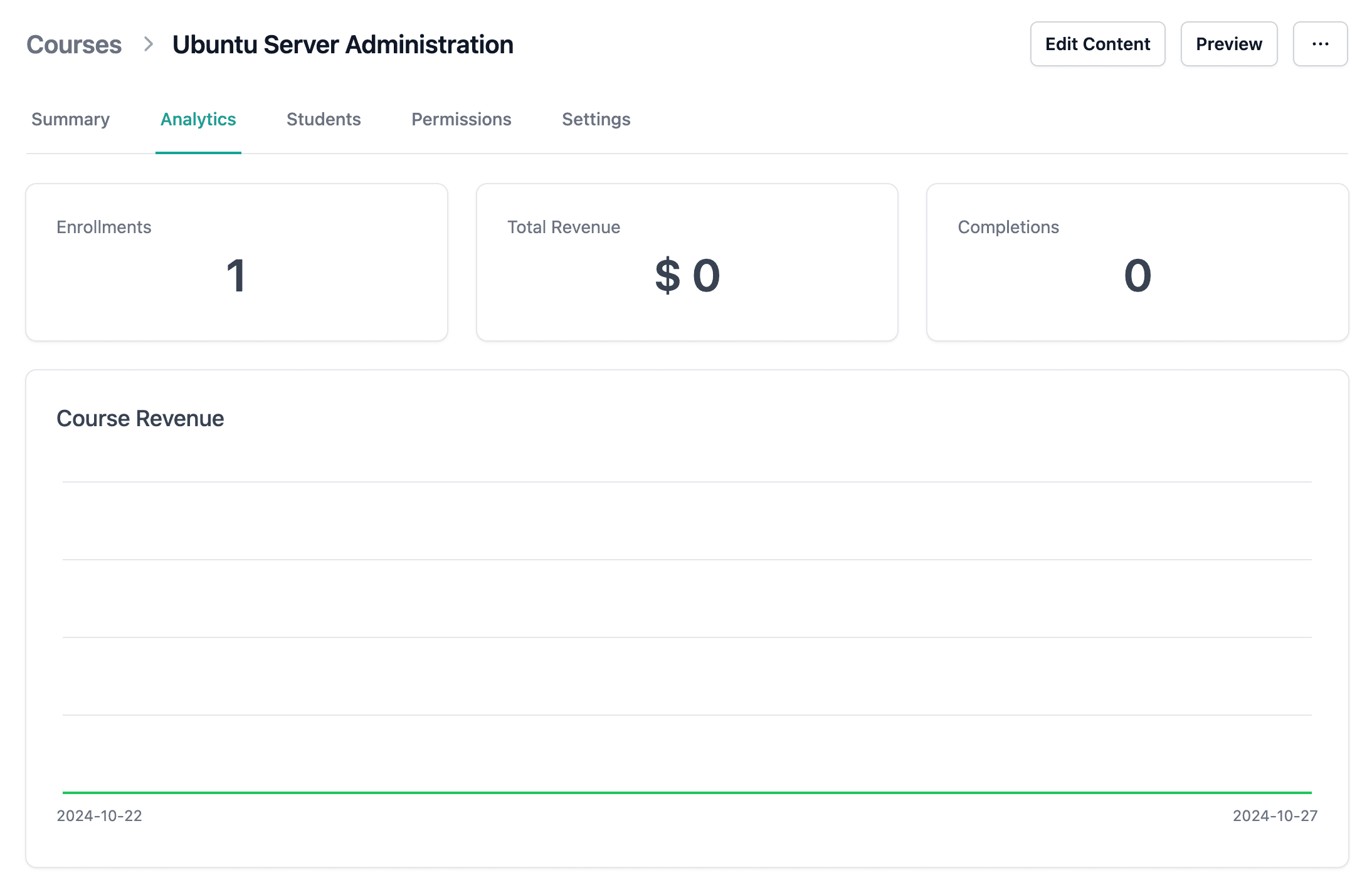
CourseStack Insights
- Revenue Distribution. Approximately two-thirds of revenue on CourseStack comes from courses priced over $200.
- Enrollment Patterns. Less than 10% of all enrollments are paid, yet they contribute significantly to total revenue.
Enhancing Perceived Value
Adding interactive elements like labs using virtual machines, code workspaces, and other interactive content types supported by CourseStack can significantly enhance the learning experience. Hands-on exercises help students apply what they’ve learned, increasing the course’s perceived value.
Don't forget to showcase student testimonials. Featuring positive feedback and success stories from past students on your marketing pages can build trust and credibility.
Conclusion
Pricing your course appropriately is crucial for maximizing revenue and reflecting the true value of your content. By strategically using free courses as funnels, thoughtfully implementing pay-what-you-can pricing, confidently setting premium prices, and enhancing the perceived value of your course, you can attract the right students and achieve your financial goals.
Remember, your expertise is valuable, and students are willing to invest in high-quality educational experiences. Don’t be afraid to set prices that reflect the effort and knowledge you’ve poured into your course!
Ready to build your own academy?
Start creating hands-on technical courses with CourseStack today. It's free to get started.